
Landing Page vs Sales Page: A Quick Breakdown
If you’re new to digital marketing, you might hear the terms landing page and sales page used frequently. While they may look similar at first, they actually serve different purposes in the marketing process. Understanding the difference can help you design better funnels and improve conversions for your online business.
Landing Page vs Sales Page
What Is a Landing Page?
A landing page is a single web page designed with one clear goal: to capture a visitor’s information or encourage a specific action. Usually, this action is signing up for something free, such as a guide, newsletter, webinar, or free trial.
Landing pages are often used at the top of the marketing funnel when visitors are just discovering your brand. Instead of overwhelming them with too much information, a landing page focuses on one simple message and one call to action.
Key characteristics of a landing page include:
A clear headline explaining the offer
A short description of the benefits
A form to collect email addresses or contact information
Minimal distractions such as navigation menus
The goal is to convert visitors into leads, which you can nurture later through email marketing or follow-up offers.
What Is a Sales Page?
A sales page, on the other hand, is designed specifically to persuade visitors to purchase a product or service. It usually contains much more information than a landing page because its goal is to address questions, build trust, and convince the visitor to buy.
Sales pages typically appear later in the marketing funnel, after someone already knows about your brand or product.
Common elements found on a sales page include:
A detailed explanation of the product or service
Benefits and features
Testimonials or reviews
Pricing information
Frequently asked questions
Strong calls to action encouraging the purchase
Because visitors are closer to making a decision, sales pages focus on building confidence and removing objections.
Key Differences Between Landing Pages and Sales Pages
While both pages aim to convert visitors, they do so in different ways.
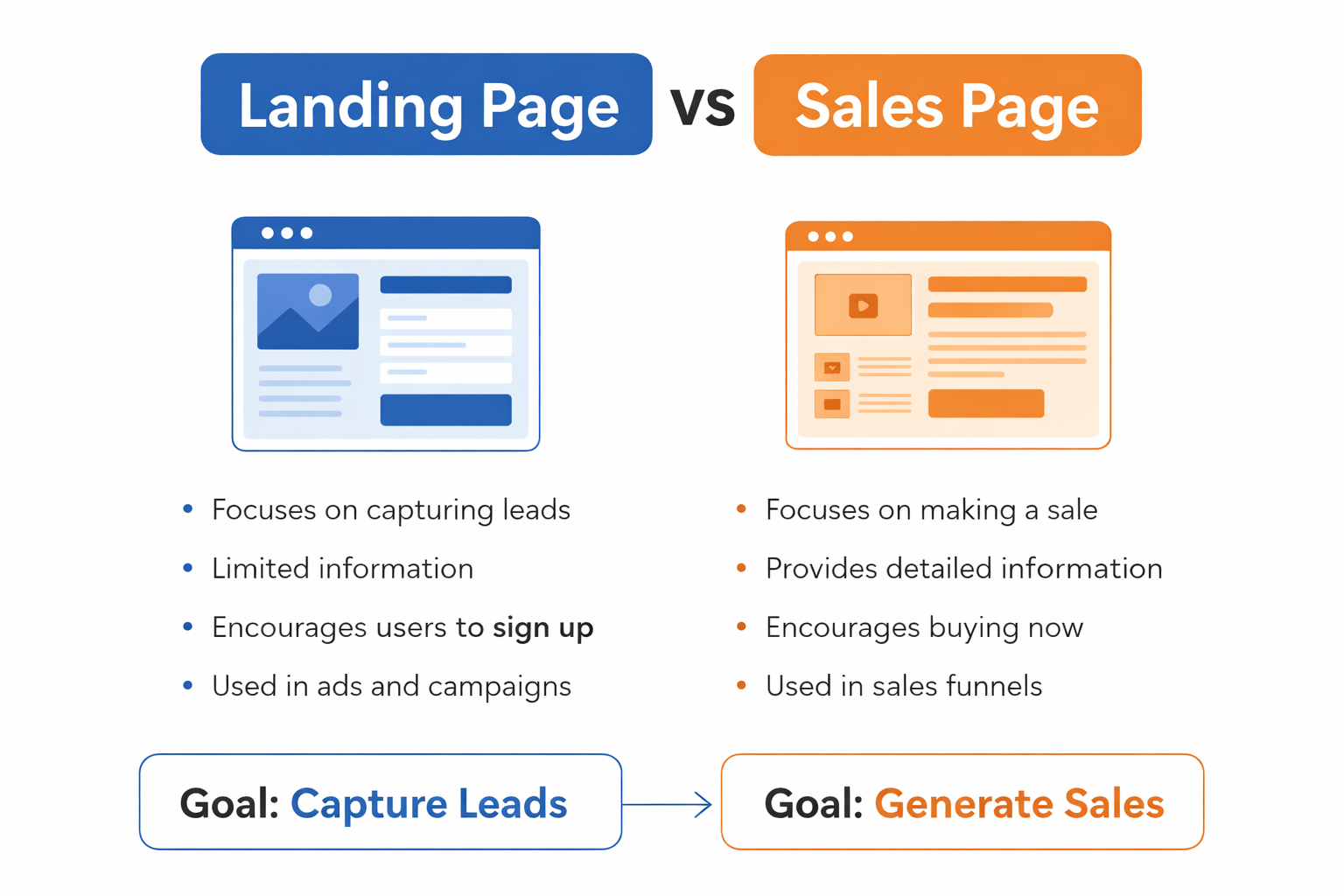
A landing page usually:
- Focuses on lead generation
- Has short and simple content
- Offers something free or introductory
- Captures email addresses
A sales page usually:
- Focuses on selling a product or service
- Contains longer and more detailed content
- Includes testimonials and proof
- Encourages a direct purchase
In many online marketing strategies, a landing page is used first to capture a lead. Then, through email follow-ups or additional content, the visitor is directed to a sales page where the actual purchase happens.
How They Work Together in a Funnel
Landing pages and sales pages are often part of the same marketing funnel. For example, a visitor might arrive at a landing page offering a free guide. After entering their email, they receive more information and eventually get directed to a sales page that promotes a paid product or service.
Modern marketing platforms like Systeme.io make it easy to create both landing pages and sales pages within the same funnel. These tools allow businesses to manage leads, automate follow-up emails, and track conversions without complicated setups.
Final Thoughts
Both landing pages and sales pages play important roles in digital marketing. A landing page captures interest and collects leads, while a sales page persuades visitors to take the final step and make a purchase.
When used together effectively, they create a smooth path that guides visitors from curiosity to conversion, helping businesses grow their audience and increase sales.
If you’re new to digital marketing, you might hear the terms landing page and sales page used frequently. While they may look similar at first, they actually serve different purposes in the marketing process. Understanding the difference can help you design better funnels and improve conversions for your online business. You can go through this Systeme.io review for better picture.